
Smart Speedometer with NFC Integration: Enhancing Two-Wheeler Safety and Accident Response through Advanced Sensor Technology
Abstract
Analyzing the stability range of acceleration in two-wheelers is a desired measurement for predicting its level of running. Though enduringly installed sensing units are supposed to be efficiently feasible, the sensor ought to operate with low power utilization and usage of highly responsive devices as MEMS sensors lead to the high usefulness of the arrangement. For safeguard purposes, the airbag deployment phase is provided in cars. Like the airbag system in a car, the Accident Detection System (ADS) in two-wheelers is an improvement in security measures. In this paper, an ADS is framed on the basis of contributing services to users. The following characteristics are used to carry out the developed work: to develop a technique to detect two-wheeler accidents; to assist the medical rescue team in getting to the scene of the accident as soon as possible; To raise the survival probability of the two-wheeler rider and co-rider. A prototype of this system was designed, and the performance was evaluated by installing it in a two-wheeler. Near Field Communication (NFC) is used for bike locking/unlocking systems in two-wheelers.
Keywords:MEMS sensor (MPU 6050)Global system for mobile/GPRS (SIM900)Global positioning systemArduino-mega board16x2 LCDNear field communication
1. Introduction
Road victims [1] are often met because of the laxity of drivers as they drive their vehicles at a faster rate. As per recent records, approximately 50% of road smash sufferers depart their lives with treatable injuries. Above 74% of bystanders are doubtful to assist a victim of severe injury. According to the existing statistics, death due to road accidents is 1,200,000 per year. In this, 85% of road accidents are due to two-wheelers, and the rate increases every year. According to the Ministry of road Transport and Highways, a circular to help road accident losses, under the act "golden hour", is frequently used to depict the urgent need for the concern of Trauma Patients. Providing first aid at precise times offers the continued existence of road accident fatalities and a reduction in the rigorousness of their injuries. As anoutcome of this rule, an Accident Detection System (ADS) is designed.
A highly integrated transmission module for near-field communication is the PN532 Near Field Communication (NFC) Module [2]. It is capable of switching between I2C, SPI, and UART pin modes due to the mode switch built within the device. The operating voltage is either 3.3V or 5V due to the integrated level shifter. It also supports NFC with Android phones and RFID reading and writing, which makes wireless connections quite convenient. Two 3mm mounting holes are included with this module, and its compact size facilitates wireless connection.
A car's security and performance [3] monitoring system work together. The speedometer is the most crucial part of a vehicle's performance monitoring system. Conventional speedometers cost a lot of money. Despite their high accuracy, the inexpensive speedometers that use Infrared Radiation (IR) are extremely susceptible. Inaccuracy arises from any kind of disruption in the radiation's path. The creation of an affordable performance monitoring system was therefore required.
Speed is one of the primary causes of road accidents, as many riders are unaware of the dangers of exceeding speed limits. Accidents occur daily, but these can be reduced with the implementation of technology that alerts riders when they are speeding. This is achieved through a speed sensor that monitors the rider's speed and provides a warning via a voice alert, forming an automatic alert system.
To enhance safety further, threats within a 360-degree range can be detected using ultrasonic sensors, which then provide the rider with visual and audio alerts. These sensors operate on the principle of ultrasonic sound waves, utilizing sound propagation and reflection of objects to detect nearby hazards. Unlike cameras, ultrasonic sensors can function effectively in low light or darkness, making them ideal for various environmental conditions. Additionally, they offer several advantages, such as compact size, lower cost, ease of implementation, and reduced power consumption.
Furthermore [4], the integration of smart detection systems presents a comprehensive solution to road safety by optimizing energy use, minimizing false alarms, and ensuring constant monitoring to safeguard riders. If broadly adopted, these technologies have the potential not only to save lives through timely assistance but also to enhance overall traffic safety by preventing accidents before they happen. By merging advanced technology with road safety measures, the future of transportation could see a significant reduction in traffic-related injuries and fatalities, making roads considerably safer for all.
2. Existing System
In Canada, a Vision-Based (VB) system for traffic ADS has been created and put into use. With this system, the accidents at the intersections can be detected and recorded and traffic at the intersections is monitored. The drawbacks of this system are [5] occurrence of mishaps is recorded, but the proper first-aid is not given at a stipulated time [6]; this system is implemented only in main areas, not in remote areas.
3. Proposed System
A new system with two phases, the detection phase and the notification phase, is meant to address the shortcomings of the current system [7]. The two MEMS sensors (triple-axis accelerometers) are integrated to create the detection phase system. A Gyro Sensor (GS) has been incorporated into it. Both the bike and the helmet have these placed separately. The two MEMS sensors detect high fluctuations in acceleration or deceleration during an accident.
A two-wheeler's orientation can be found using the built-in GS. With the use of this information, the accident is verified, and the notification phase begins, during which the Global System for Mobile (GSM) communications module creates, and an agony symbol to the emergency recovery team is transmitted. For the emergency recovery crew, crucial information is supplied, including the accident site. As a result, even in rural areas or late at night after an accident, a person can be guaranteed medical attention. PN532 NFC ID/tag is attached to the front of two-wheelers to start the ignition system automatically and to prevent the bike from being stolen.
3.1 System Architecture
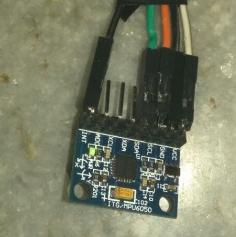
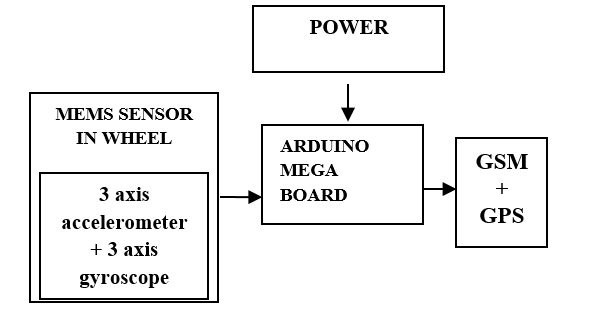
The monitoring system [8] consists of one sensor module as a MEMS sensor, which comprises of tri-axial accelerometer and GS. This sensor module is placed on the wheels of the two-wheeler, particularly in the fork tube. Horizontal acceleration is measured by a tri-axial accelerometer at each instant when the vehicle is under driving conditions. The actual orientation of the vehicle under the resting condition and at the driving condition is monitored with the help of a GS .
When an accident occurs at any location [9], the MEMS sensor detects by measuring the drop in acceleration rate or rise in deceleration rate within a second and sends the signal to the Arduino-mega board, which transmits the alert voice message and text message along with the accidental area information to the rescue team via GSM and Global Positioning System (GPS) module. The overall layout of this system is shown in
3.2 Mems Sensor
This module [10] is designed on the combination of a tri-axial accelerometer and a tri-axial gyroscope. The gyro-sensor comprises of integration of three self-determining gyroscopes. Orientation along three axes on the basis of rotation can be monitored separately. The received output signal is the voltage signal, which is attained once the resultant signal is subjected to a progress of amplification, demodulation and filtration. Similar to the GSs [11], three separate accelerometers are integrated into a single chip. On the flat surface, it shows the reading along the X and Y axis as 0g, whereas the Z axis shows +1g. No supply voltage is required for this accelerometer. Both sensors have separate 16-bit ADCs for frequent sampling processes.
3.3 Arduino Mega
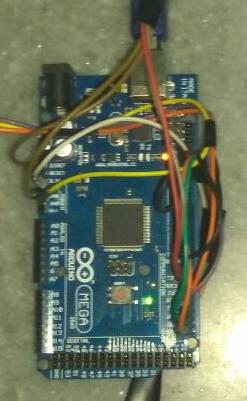
Arduino mega board [12] consists of 54 digital IO pins, out of which 14 pins are used as PWM pins, 4 UARTs 16 analog pin inputs. This board is interfaced with the computer via a USB cable. The board can be operated at the external power supply of 6-12v. It selects the power source automatically when it is connected to the computer. It provides 16 ADC pins to get digital output from analog inputs. It is operated at a core speed of 16MHz.
3.4 GSM/General Packet Radio Service (SIM900)
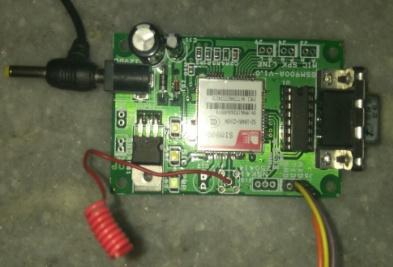
This is designed [13] on the basis of the Time Division Multiple access technique for the means of transmitting signal. It uses four quad-band frequencies for sending voice and text messages in the range of frequencies 850/900/1800/1900MHz. The data rate of transmission ranges from 64Kbps to 120Kbps. It would be operated at various baud rates in the ranges from 9600-115200 bps. This module uses an RF antenna for interfacing it with nearby devices. GSM works on the basis of AT COMMANDS. It produces digital data after a series of data compression processes. The received data is sent via a pair of streams in a common channel.
3.5 Global Positioning System
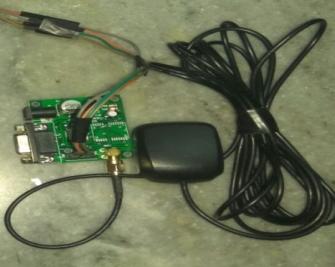
The GPS module [14] used in this design is (MT5212). It has high sensitivity in the range of -148dbm for cold start and -165dbm for tracking. It is highly used for multipath detection, suppression and jamming detection. It supports external SPI flash memory data logging. It provides an internal flash for optional 75K point data logging. It works directly with an active or passive antenna.
3.6 Near Field Communication
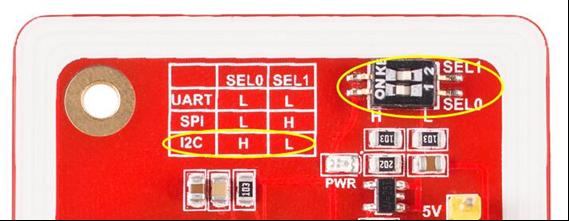
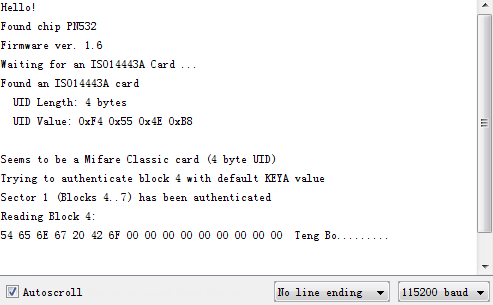
PN532 [15] near-field communication is used for the security of two-wheelers. This security system has to work in I2C mode. The I2C Master and the I2C device communicate with each other via two connections. These two cables are referred to as the SDA and SCL lines; SDA and SCL stand for serial data and serial clock, respectively. A4 and A5 are connected to the SDA and SCL pin of NFC. Slide the switch to I2C mode on the module has SEL0 for high and SEL1 for low operations. It allows only an NFC card / mobile phone with NFC to start the two-wheeler. In near field communication consists of the inbuilt antenna to know the authorized person's unique identification value to lock or unlock two-wheelers.
3.7 Experimental Setup
A brief explanation is given below:
I. The MEMS sensor is fixed in the handle of the two-wheeler to measure the acceleration range of the two-wheeler.
II. If the sensor detects a variation from the threshold value (acceleration rate), it sends an analog signal as the voltage to the Arduino.
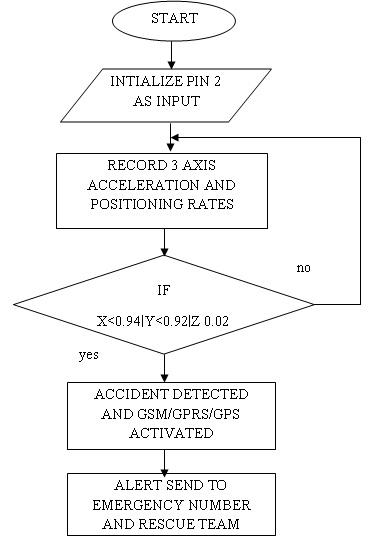
III. The Arduino receives the signal from the MEMS sensor. If both the signals from the accelerometer sensor and gyroscope sensor cross the limit, it confirms that the accident has been encountered, and an alert SMS is sent.
IV. The alert SMS from the Arduino is sent to the rescue team along with the location via the GSM module and GPS module.
V. Using NFC, other than the owner can securely access the bike.
4. Simulation Results
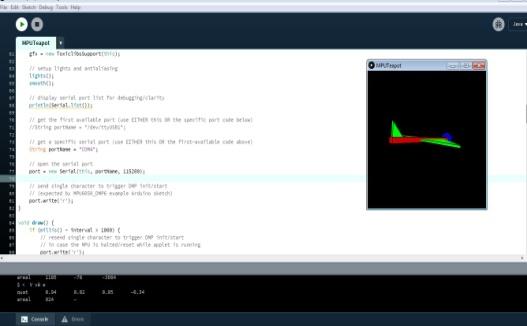
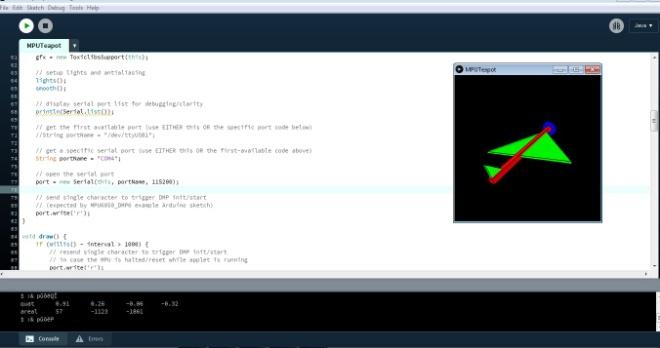
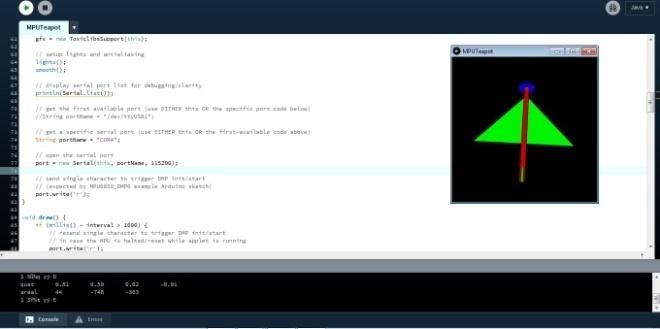
This design has been installed in the bike and was evaluated at various positions. NFC ID is monitored periodically using Arduino IDE. The mems sensor reading was periodically monitored through the Arduino megaprocessor. The output was initially checked with the help of a 3D view, and the results at various positions were displayed in the following figures.
The flowchart is displayed below.
5. Conclusion
According to the current statistics, 85% of road accidents are due to two-wheelers, and the rate increases every year. Many young people often use two-wheelers and are affected with permanent disabilities and, even worse, loss of life during accidents. Therefore, efforts have been initiated to avoid such types of accidents involving motorcyclists. In this regard, a new system is to be developed by which quick medical attention can be provided. Low-cost and extremely effective resources are used in this project. The emergency recovery crew is given the necessary information, including the accident site. This ensures that someone will receive medical attention even if they are in a rural area or had an accident late at night. To control the theft using NFC. This is the main advantage of our project.
Acknowledgements
The authors express their gratitude to everyone who supported this research.
Authors Contributions
Each author played an equal role in the research.
Conflicts of Interest
The authors report that there are no conflicts of interest.
References
- [1] Falahati, A., & Shafiee, E. (2022). Improve safety and security of intelligent railway transportation system based on balise using machine learning algorithm and fuzzy system. International journal of intelligent transportation systems research, 20(1), 117–131. https://doi.org/10.1007/s13177-021-00274-1
- [2] Archana, D., Boomija, G., Manisha, J., & Kalaiselvi, V. K. G. (2017). Mission on! Innovations in bike systems to provide a safe ride based on IoT. 2017 2nd international conference on computing and communications technologies (ICCCT) (pp. 314–317). IEEE. https://doi.org/10.1109/ICCCT2.2017.7972296
- [3] Al Mamun, M. A., Puspo, J. A., & Das, A. K. (2017). An intelligent smartphone based approach using IoT for ensuring safe driving. 2017 international conference on electrical engineering and computer science (ICECOS) (pp. 217–223). IEEE. https://doi.org/10.1109/ICECOS.2017.8167137
- [4] Sethi, P., & Sarangi, S. R. (2017). Internet of things: Architectures, protocols, and applications. Journal of electrical and computer engineering, 2017(1), 9324035. https://doi.org/10.1155/2017/9324035
- [5] Razzaque, M. A., & Clarke, S. (2015). A security-aware safety management framework for IoT-integrated bikes. 2015 IEEE 2nd world forum on internet of things (WF-IoT) (pp. 92–97). IEEE. https://doi.org/10.1109/WF-IoT.2015.7389033
- [6] Nasr, E., Kfoury, E., & Khoury, D. (2016). An IoT approach to vehicle accident detection, reporting, and navigation. 2016 IEEE international multidisciplinary conference on engineering technology (IMCET) (pp. 231– 236). IEEE. https://doi.org/10.1109/IMCET.2016.7777457
- [7] Bari, A. S., Falalu, M. A., Umar, M. A., Sulaiman, Y. Y., Gamble, A. M., & Baballe, M. A. (2022). Accident detection and alerting systems: A review. Global journal of research in engineering & computer, 2(4). https://doi.org/10.5281/zenodo.7063008
- [8] Ulz, T., Pieber, T., Steger, C., Lesjak, C., Bock, H., & Matischek, R. (2017). Secureconfig: NFC and qr-code based hybrid approach for smart sensor configuration. 2017 IEEE international conference on rfid (RFID) (pp. 41–46). IEEE. https://doi.org/10.1109/RFID.2017.7945585
- [9] Patil, M. M., Rawat, A., Singh, P., & Dixit, S. (2016). Accident detection and ambulance control using intelligent traffic control system. International journal of engineering trends and technology (IJETT), 34(8), 400–404. https://doi.org/10.14445/22315381/IJETT-V34P278
- [10] Gautam, M. S., Chahal, R. P., Duhan, S., & Khatri, H. (2021). Analysis of fusion excitation function for 16 o+ 64 zn reaction at sub-barrier energies. In Progression in science, technology and smart computing (pp. 100– 104). https://b2n.ir/p12768
- [11] Kambadkone, P. R., Hancke, G. P., & Ramotsoela, T. D. (2017). Real time speed detection and ticketing system. 2017 IEEE africon (pp. 1593–1598). IEEE. https://doi.org/10.1109/AFRCON.2017.8095720
- [12] Fernando, A. H. V, Muthuarachchi, M. D. C., Anandakumar, D. R., Chamalka, W. N. R. B., Gamage, M. P., & Amarasena, N. C. (2020). Motorcyclists safety assistant app. 2020 11th IEEE annual information technology, electronics and mobile communication conference (IEMCON) (pp. 414–419). IEEE. https://doi.org/10.1109/IEMCON51383.2020.9284940
- [13] Bibri, S. E. (2018). The IoT for smart sustainable cities of the future: An analytical framework for sensor-based big data applications for environmental sustainability. Sustainable cities and society, 38, 230–253. https://doi.org/10.1016/j.scs.2017.12.034
- [14] Dong, G., Tang, M., Wang, Z., Gao, J., Guo, S., Cai, L., … & Boukhechba, M. (2023). Graph neural networks in IoT: A survey. ACM transactions on networking., 19(2). https://doi.org/10.1145/3565973
- [15] Chen, H., Liu, J., Wang, J., & Xun, Y. (2023). Towards secure intra-vehicle communications in 5G advanced and beyond: Vulnerabilities, attacks and countermeasures. Vehicular communications, 39, 100548. https://doi.org/10.1016/j.vehcom.2022.100548