
Deep Reinforcement Learning-Enhanced Levenberg-Marquardt Neural Network for Improved Energy Efficiency in Wireless Sensor Networks
Abstract
In applications like environmental monitoring and tracking, ensuring the reliability of Wireless Sensor Network (WSN) and Energy Efficiency (EE) optimization serves as a major challenge in recent years. Then, severe power limitations were often faced by these WSN networks because (sensor nodes) SN have limited energy capacity. Here, an advanced method was suggested in this study, that method integrates the Reinforcement Learning (RL) into the Low-Energy Adaptive Clustering Hierarchy (LEACH) protocol for the purpose of improving clustering and Energy Management (EM). The Deep Reinforcement Learning (DRL) with Enhanced Levenberg-Marquardt Neural Network (ELMNN) classification was integrated in this model. Smart optimization of sensor communication protocols and clustering strategies by this integration. This model supports in reducing the Energy Consumption (EC), and prolonging the Network Lifetime (NL). From the simulation outcomes, it is clear that the suggested method executes better than the conventional methods by EE, Anomaly Detection (AD) accuracy, and network stability. These simulated outcomes highlight the suggested model’s ability. This model also supports the Real-Time (RT) applications in energy-constrained WSN.
Keywords:Deep RLEnhanced levenberg-marquardt neural networkEnergy efficiencyAnomaly detectionWSNNetwork lifetime
1. Introduction
In applications like environmental monitoring and tracking, Wireless Sensor Network (WSN) are widely employed. One of the major challenge for WSN is the energy limitations [1]. For the purpose of optimizing EC and ensuring long-term functionality, these WSN networks depend upon the Energy Efficiency (EE). Recently, these issues can be resolved by suggesting several Routing Protocols (RP). Here, considering the limited capacities of sensors and extending the Network Lifetime (NL) still became a challenge. For balancing the network performance with EC, effective Energy Management System (EMS) are needed. Thus, in Real-Time (RT) energy-constrained applications, prolonging NL and ensuring reliable Data Transmission (DT) were considered to be the objective of this EMS.
In remote or wide areas, with minimal human intervention, WSN are widely employed for communication [2]. These networks communicate through the radio signals to form a network for data collection and DT. Here, these networks have SN. The environmental settings, sensor deployment, and RP greatly impacts the EC, and it is considered to be a major challenge in WSN. Optimizing EC and extending NL can be attained by several RP. WSN’s long-term functionality in various applications can be attained by these protocols, and these protocols helps in balancing the EE For DT to Base Station (BS), batteries were employed by the low-power SN in the WSN [3]. Anomalies refers to faulty sensors, as it generates the irregular data readings. Anomalies also caused by limited resources or communication issues. These networks are suspectible to these networks. To detect the background anomalies, the EE RP was established. Extending NL and network stability are considered to be the main objective of the suggested method. Anomaly Detection (AD) methods like Local Outlier Factor (LOF), K-Nearest Neighbours (KNN), and Random Forest (RF) was utilized by this method.
Recently, WSN have gained attention due of its accessibility and small size [4]. Thus, precision agriculture, building security, and environmental monitoring were few of applications for WSN. Especially in unsecured or hostile settings, WSN are suspectible to security risks. The most crucial thing is to ensure secure DT. For preserving data privacy, several techniques have been introduced. Focussing Attack Detection (AD) in this study is crucial for preserving network security. An Intrusion Detection (ID) System (IDS) is suggested by researchers and tested on a WSN-DS dataset. It uses the online aggressive classifier for identifying Denial of Service (DoS) attacks and the Information Gain Ratio (IGR) for Feature Selection (FS).
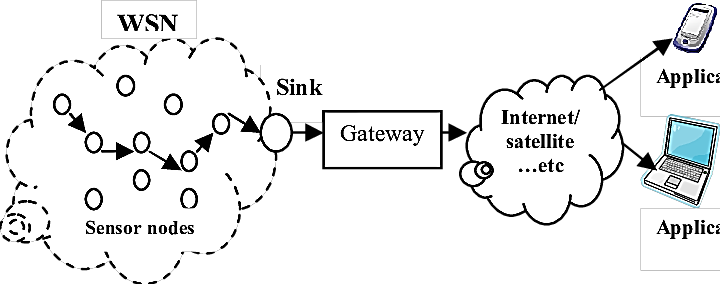
In WSN [5], strategically placing a few heterogeneous nodes with higher computational capabilities can significantly enhance NL and performance. While various clustering algorithms have been developed to optimize EE and network coverage, determining the optimal network structure remains a challenging task due to the vast number of possible sensor cluster configurations. This complexity arises from the need to balance EC, communication efficiency, and the overall stability of the network. Despite advances, there is still a need for more effective approaches to determine the ideal placement and structure of heterogeneous nodes in WSNs as shown in Fig. 1.
The reliability and security of WSN depend on AD [6]. Improving resource efficiency is essential in considering EC difficulties. Online Anomaly Detection with Energy Efficiency (OAD-EE) techniques with Cloud-Based (CB) model aggregation and Ensemble Federated Learning (EFL) with cloud integration are two sophisticated algorithms created for AD in WSNs. The FL and Ensemble Learning (EL) is employed by EFL with cloud integration for the purpose of enhancing the detection accuracy and securing data privacy. For improving the EC in SN, online learning and EE techniques are used, and it is considered to be the main aim of the OAD-EE. These algorithms collaborate in creating an effective and comprehensive method for WSN.
The Green Internet of Things (GIoT) mainly emphasis on EE, and it have raised its applications. In sensing technologies, GIoT has a major part. Many sectors like healthcare, smart cities, and transportation were revolutionized by IoT. Then, an excessive EC has become the outcomes of the rapid growth of SN. Problems over these networks' effects on the environment are being raised. Thus, researchers and engineering professionals must aim to overcome those issues. For sustainable operations, and maintaining security over a range of domains, the EE and security is crucial for IoT development.
This research focuses on improving EE through an integrated approach that combines advanced techniques for the RL-LEACH protocol to enhance clustering and Energy Management (EM). It combines Deep Reinforcement Learning (DRL) with the ELMNN for AD. The proposed method is benchmarked against existing approaches, showing notable improvements in tumor detection accuracy, sensitivity, and processing efficiency. Experimental outcomes show that the suggested framework surpasses traditional methods in EE, AD accuracy, and network stability, highlighting its potential for RT applications in energy-constrained WSNs.
The remaining sections of the study are organised in the following order: A brief overview of some of the research in the area of disease classification is provided in Section 2. Descriptions of the suggested approach for the DRL-ELMNN scheme are given in Section 3. The results of the experimental performance analysis are described in Section 4. And finally, the results are summarised in Section 5.
2. Related Work
Wang et al. [7] introduced a greedy algorithm for inter-cluster communication and weight-based Cluster Head (CH) election for optimal routing. The method integrates clustering with sink mobility to enhance EE. To validate the effectiveness of the suggested method, the suggested approach is compared to CCMAR and ECDRA algorithms. The synthetic dataset is used for performing this analysis, and this synthetic dataset is generated for sensor networks, various events was also simulated. From the outcomes of the simulation, it is clear that the suggested method exhibits superior improvements in EC, NL, and DT. Then, the impact of network parameters like node density and mobility patterns were explored in this study. This analysis also attains better efficiency and scalability in dynamic WSN backgrounds.
To improve ID in WSN, a GWOSVM-IDS was suggested by Safaldin et al. [8]. Optimizing FS and reducing False Alarms (FA) will pay way for improving ID. A popular benchmark dataset named NSL-KDD'99 dataset was employed for ID. For performance analysis, these datasets are used. From the analysis, the outcomes indicate that the suggested method performs better than the current methods by accuracy, lower FA Rates (FAR), fewer selected features, and quicker execution time. The Grey Wolf Optimizer (GWO) with the configuration of 7 wolves helps in generating favorable outcomes. This GWO attains higher Detection Rates (DR) and overall efficiency. Thus, it is clear that, for robust and effective WSN IDS, this GWO is considered as an effective method.
The mutual user authentication system was suggested by Gope et al. [9]. For Industrial Wireless Sensor Network (IWSN), these systems are designed. Here, privacy-preserving and lightweight methods for safe access are the main focus of IWSN. The SN security can be attained by utilizing the cryptographic methods like one-way hash functions, physically unclonable functions, and bitwise exclusive operations. The protocol ensures security even in the event that a sensor node is hacked. This protocol is secure, effective and it was validated by the outcomes of the analysis. This model is considered to be an effective method for sensor devices with a limited resource. Then, it also provides a comprehensive method for user authentication in IWSN applications. This method also ensures the balance among the security and efficiency.
An EE RP for Underwater Wireless Sensor Network (UWSN) was utilized for improving the EC and it has been suggested by Lilhore et al. [10]. An energy-balanced and depth-controlled method was employed by the suggested method. For Data Fusion (DF), BackPropagation (BP) NN with an Improved Genetic Algorithm (GA) was integrated. Improved encoding, crossover, and mutation approaches are also employed. Selection of high-energy nodes, reducing DT, and optimized EE were considered to be the main focus of this method. From the simulation outcomes, an 86.7% Packet Delivery Ratio (PDR), 12.6% EC, and a 10.5% Packet Loss Ratio (PLR), was attained by the suggested method, it is clear that the suggested method is effective for UWSN and it performs better than the current methods.
According to Deebak and Al-Turjman [11], a secure routing and monitoring protocol was used to identify and stop attacks in WSN. This suggested approach used the Two-Fish (TF) symmetric key encryption technique. This integration will help the protocol choose safe sensor guard nodes. The Authentication and Encryption Model (ATE) with Eligibility Weight Function (EWF) was used. Then, complex symmetric keys are used to secure these nodes. The hybrid RP combines multipath Optimised Link State Routing (OLSR) with Adhoc On-Demand Multipath Distance Vector (AOMDV) protocols. It is evident from the simulation results that the suggested method outperforms the existing approaches in terms of robust multipath delivery, robust security against mobile attacks, and node percentage monitoring.
Dual-side charging techniques for Mobile Robot (MR) traversal planning are suggested by Chen et al. [12]. By doing this, the MR traversal path's length, EC, and completion time are reduced. According to MR dual-side charging, MR may wirelessly charge neighboring sensors on either side of a specified channel while concurrently sending sensory data to MR. Based on the sensor power levels and distances the power diagram is constructed. The path planning and charging methods was facilitated by the power diagram. The MR movement, EC and completion time were additionally optimized by a clustering-based approach. Thus, simulation analysis was conducted, from the outcomes, it is clear that the suggested method performs better than the current methods by the EC, reduced total distance, and minimized completion time in WRSN. An effective Cluster Head Election (CHE) was introduced for IoT applications like environmental monitoring, smart cities, and systems, and it was suggested by Behera et al. [13]. Based on the initial and Residual Energy (RE) levels, the method replaces the CH location for the purpose of selecting nodes with high energy. Then, the simulation outcomes indicate that the suggested method performs better than the Low-Energy Adaptive Clustering Hierarchy (LEACH) methods by a 60% increase in Throughput (T), a 66% improvement in NL, and a 64% increase in RE. The algorithm's efficiency in enhancing the performance of IoT-based networks was highlighted in the outcomes.
For optimizing the crop irrigation, an effective agricultural watering system based WSN was designed, and it was suggested by Muangprathub et al. [14]. A hardware control box with soil moisture sensors, a web-based application for Data Analysis (DA) and Data Management (DM), and a mobile application for user interaction were the3 main components that is integrated by the system. The hardware collects the RT data regarding the soil moisture, temperature, and humidity. To predict the optimal conditions for crop growth, this collected data was then analyzed by the support of web application. Based on the sensor data, this irrigation system can be automatically, or manually managed by the users with the support of the mobile app. This will also facilitate the adaptability. Notifications via the LINE API are also incorporated into the system for the purpose of informing users. Then, the optimal soil moisture levels for vegetable growth was effectively maintained by the system when tested in Makhamtia District, Suratthani Province, Thailand. From the outcomes of the analysis, the reduction in irrigation costs was attained, improved agricultural productivity was demonstrated. The way the digital innovation enhances the sustainable farming practices and resource management was also demonstrated by the outcomes.
By utilizing software-defined radios, a realistic SigFox communication model, and a tested SigFox traffic generator was offered by Lavric et al. [15]. This method facilitates the performance evaluation in large-scale, high density WSN. When 360 channels are accessible, about 100 sensors can transmit data simultaneously at an optimal performance. If this limit is exceeding then there will be a congestion, and it may cause significant performances degradation named "avalanche effect". In case of large-scale, high-density backgrounds, several methods were suggested in this study to lessen this problem and also for enhancing the SigFox networks performances. The comprehension regarding the limitations SigFox was offered by this study. For improving the SigFox efficiency and scalability in IoT applications, this study offers methods.
To ensure the sensor Data Integrity (DI), An integrated IoT platform was suggested by Hang and Kim [16]. This integrated IoT platform utilizes Blockchain Technology (BCT). A beneficial application was offered by this platform to the device users, as it helps in managing devices over several domains. A n immutable repository was also offered for easy access. The essential components of conventional IoT systems were incorporated, by doing this, the RT monitoring and control between end users and devices are facilitated. The business logic is controlled by the Smart Contracts (SC), and these SC offers terms and conditions. The proposed approach is demonstrated as a proof of concept using Raspberry Pi devices in the Hyperledger Fabric permissioned network. Several performance metrics and a benchmark study were utilized for evaluating the capabilities of the platform.
Bu et al. [17] explored the filtering problems associated with nonlinear systems in sensor networks characterized by dynamic topologies. Their research focused on the implementation of the Round-Robin protocol within finite horizon contexts. The study provides insights into the complexities of managing nonlinear filtering in evolving network structures. The RR communication method was utilized by this method. Switching topologies caused by weak node-to-node connections are considered for enhancing the Bandwidth (BW) and reducing resource utilization. The primary goal is to develop distributed filters that maintain a consistent average H∞ performance within a specified range. To ascertain the parameters of the desired filters, the study uses a recursive approach based on matrix inequalities. It creates the necessary conditions for these filters to exist in the parameters of the study. A numerical simulation is then employed for assessing the effectiveness of the suggested filter design method. This study makes a substantial contribution to distributed filtering techniques in adaptable network topologies.This distributed filtering methods is applicable to sensor networks where robust filtering under dynamic situations and effective resource utilisation are crucial.
3. Proposed Methodology
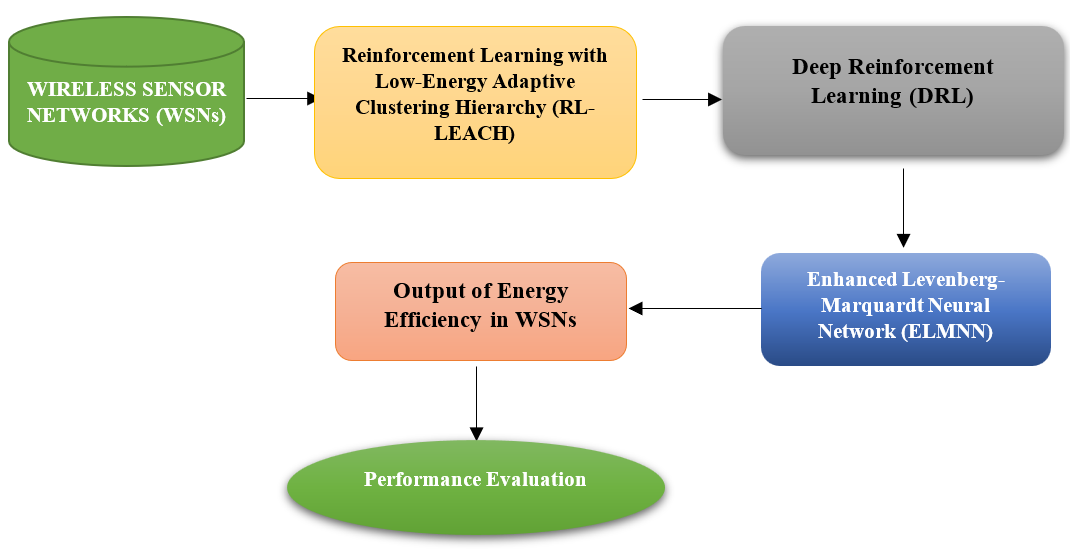
In this paper [8], the performance of EE in WSNs categorization, the Enhanced Levenberg-Marquardt Neural Network (ELMNN) technique is suggested. Classification is the primary process of the suggested method. The general block diagram of the suggested system is shown in Fig. 2.
3.1 RL-LEACH
In this study [18], the RL-LEACH protocol improves the efficiency of WSN by leveraging Reinforcement Learning (RL) to optimize CH Selection (CHS). This approach considers key factors such as EC, coverage area, and the distance to the sink node, ensuring a more EE network.
Initially, each node generates a random number rNum within the range [0,1]. This value is compared against a calculated threshold Tnn(m), which is determined as shown in Eq. (1):
p Eresidual Tnn(m) = { . , m ∈ G, 1 − p. (m mod initial
p (1)
0, otherwise.
Here, p is the desired percentage of CH nodes, m is the node index, Eresidual is the node’s remaining energy, Einitial is its initial energy, and represents the set of eligible nodes for CHS.
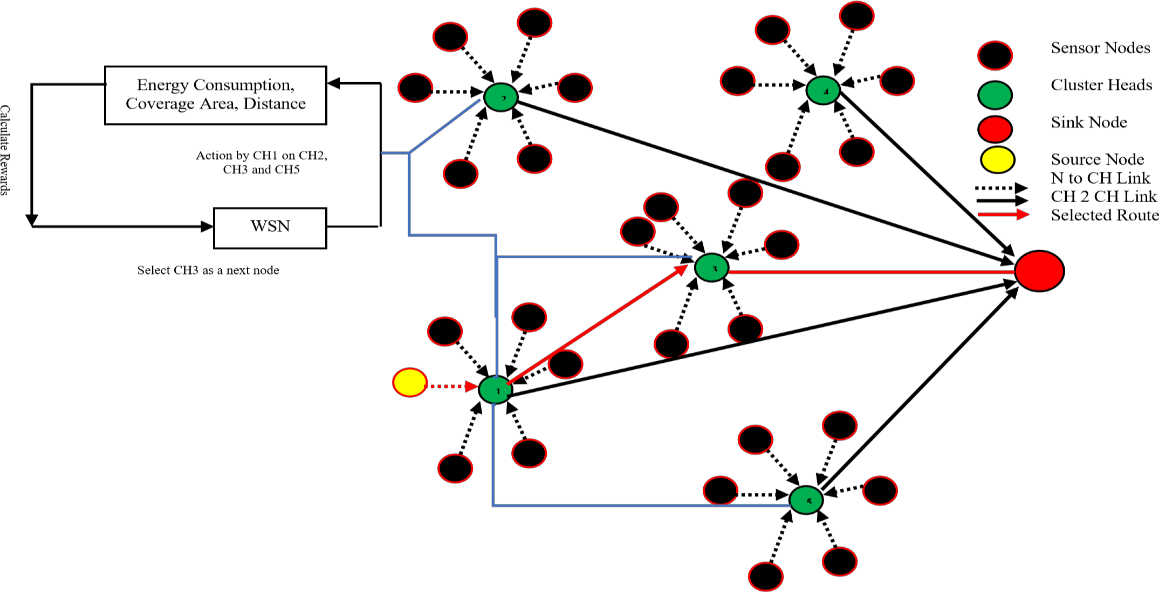
In Fig. 3, RL is used to evaluate each node based on the following metrics:
I. Energy Consumption (EC) (Reward(i,1)): energy required for data aggregation and communication.
II. Coverage area (Reward(i,2)): the communication range of the node.
III. Distance to the sink (Reward(i,3)): determines proximity to minimize transmission energy.
Nodes are assigned reward values based on these criteria, and those with the highest rewards and satisfaction rNum < Tnn(m) are selected as CHs.
DT efficiency is further optimized by using selected CHs as intermediate nodes. The RL algorithm analyzes reward metrics and CH properties to determine the most efficient route from source nodes to the sink, minimizing energy usage and improving data delivery.
Algorithm 1: RL-LEACH algorithm
Start
I. During cluster formation, each node generates a random number rNum in [0,1].
II. The given formula is employed to compute the threshold Tnn(m) for each node.
III. To evaluate nodes based on EC, coverage area, and distance, the RL was applied.
IV. Initialize a reward matrix reward []:
− Reward(i,1): energy consumption (i).
− Reward(i,2): coveragearea (i).
− Reward(i,3): distance (i).
V. Identify nodes with the highest rewards.
VI. If rNum < Tnn(m) and the node has the maximum reward:
− Select the node as a CH.
VII. Otherwise, exclude the node from the CHS.
VIII. Optimize routing by choosing intermediate CHs based on their rewards and properties.
IX. Return the optimized CHs for effective cluster monitoring and DT.
End
Here, this protocol supports in ensuring an effective CHS and routing. The NL has been extended by this protocol, as it also improves the overall performance.
This RL-LEACH protocol integrates the threshold-based CHS with a RL method, and this integration will assist in improving the overall performance and lifetime of the WSN [19]. The nodes are evaluated based on the EC, coverage area, and distance to sink for the purpose of attaining an optimal CHS and effective routing. This method facilitates in reducing the EC, improving the DT reliability, extending NL. So, this method is considered to be effective for robust EE WSN management.
3.2 Deep Reinforcement Learning
The complex Decision Making (DM) problems was managed by DRL, as it integrates RL and DL. It is visualized in the Fig. 4 [20]. The Deep Neural Network (DNN) was utilized for learning the optimal features from High-Dimensional (HD) data. DRL can optimise processes like network traffic or EC in Resource Allocation (RA) by processing incoming data and then passing it via a DNN for DM.
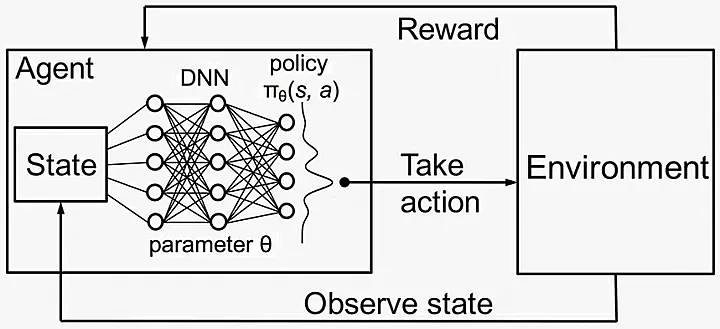
Deep Q-Learning (DQN) and Deep Policy Gradient (DPG) are two important DRL methods. DQN is value-based, where the agent learns a Q-function that estimates the expected cumulative reward for a given state-action pair. The Q-value is updated using the Bellman Eq. (2):
max ′ ′
Q(s, a) = R(s, a) + γ Q(s , a ), (2) where R(s, a)is the immediate reward, γ is the discount factor, and is the next state.
DPG [21] is policy-based, where the agent directly optimizes the policy, π(a|s; θ), by performing gradient ascent to maximize expected rewards. In Eq. (3), The objective is:
J (θ) = πθ[R(s, a)], (3)
where R(s, a) is the reward after action a in state. DQN is best for discrete action spaces, while DPG is suited for continuous action tasks, such as resource allocation or robot control.
3.3 Enhanced Levenberg-Marquardt Neural Network
The ELMNN [22] minimises the Sum of Squared Errors (SSE) in order to optimise network weights. The difference between expected and actual outputs across training patterns and output neurones is measured by SSE. To increase accuracy and speed up convergence, the optimisation employs a hybrid strategy that combines the Gauss-Newton method with gradient descent.
The gradient vector is obtained from the error function using the algorithm. The impact of weight changes on the error is quantified by this algorithm. The Hessian matrix is used, it shows the error's second-order derivatives, to make computations easier. The Jacobian matrix and its transpose are then used to approximate it. By doing this, the computational burden of computing the complete Hessian directly is avoided.
Weight updates in ELMNN are governed by an adaptive rule in Eq. (4):
T −1 T
∆ = − (J J + λI) J e. (4)
In this case, e is the error vector and J is the Jacobian matrix. I is the identity matrix, and λ is the damping factor. During training, the λ fluctuates dynamically to accelerate convergence and stabilise the optimisation process. Consequently, it rises as the error rises and falls when it falls.
Stability and speed are balanced by this adaptive process [23]. Even sophisticated neural networks can converge efficiently due to this method. While approximating the Hessian, ELMNN uses second-order optimisation to achieve excellent computational efficiency without compromising speed. It is appropriate for tasks requiring reliable and effective training, especially in applications with complicated or HD data, because its iterative weight refinement enables exact error reduction.
3.4 Classification Using DRL-ELMNN
Adaptive policy optimisation through DRL and the exact weight refinement of the ELMNN are combined in the DRL-ELMNN system [24]. It optimises WSN classification tasks with an emphasis on lower latency and EE.
The clustering metric is defined as represented in Eq. (5):
C(i, j) = α . dij + β . , (5)
Ei Where dij is the distance between nodes i and j, Ei is the RE, and α, β are weight factors balancing distance and energy. Nodes with minimal C(i, j) values are selected as CHs.
For DT in Eq. (6), Non-Cluster Head (N-CH) nodes transmits information to the CH or sub-CH nodes based on link quality.
Lij = , (6)
1 + RSSIij where RSSIij is the received signal strength indicator between nodes i and j.
Sub-cluster CH nodes aggregate data from N-CH nodes and forward it to the main CH, reducing the primary CH's energy burden. In Eq. (7), the data aggregation at CH nodes is represented as:
DCH = ∑ di + ∑ DSub−CH .
j (7)
i ϵ N−CH j ϵ Sub−CH
The total EC is minimized as represented in Eq. (8):
ET = ∑ Ei + ∑ Ej , (8)
tx rx
i=1 j=1
where Ei and Ej are the transmission and reception energies of nodes, respectively. The DRL updates the
tx rx
routing policy with the Eq. (9):
max ′ ′
Q(s, a) ← Q(s, a) + α [ + ′ ( , ) − ( , )], (9)
where Q(s, a) is the Q-value for state-action pair (s, a), is the reward, and γ is the discount factor.
The framework minimizes total latency LT with the Eq. (10):
L = ∑ v . d , (10)
T i,CH
where di,CH is the distance from node i to its CH and v is the transmission speed.
By using effective clustering, sub-clustering, and routing, this method minimises latency, lowers EC, and increases classification accuracy [25].
4. Experimental Result
Here, the performance of the suggested method and the current methods are compared for assessing the effectiveness of the model [26]. System setup for the suggested system, implemented in MATLAB, consists of an Intel i3 processor running at 3.0 GHz, 8 GB of RAM, and 1TB of hard disk storage. The simulation efficiency of the suggested method is compared to other standard methods for determining the suggested methods efficiency.
Problems like neural network classification are effectively resolved by these classification tasks. So, these classification tasks are well-suited for addressing those issues. Adjusting the parameter greatly impacts the model’s accuracy. From the analysis, it is clear that the suggested method is beneficial in enhancing the computational efficiency and accuracy of the model. A crucial benchmark was offered for DRL-ELMNN by these models [27]. The performance comparison outcomes among the suggested method are presented in
Table 1.
This table is shown in the PDF version of the article.
End-to-End Delay
In the context of WSN, the total time needed for a data packet to transmit from the source node to the Destination Node (DN) are measured by a crucial metric named E2ED [28]. Delays like processing, transmission, and propagation delays are included. The adaptability of the network is demonstrated. For time-sensitive applications like RT monitoring, healthcare systems, and emergency response scenarios, minimizing the E2ED is crucial.
∑i=1(Tarrival − Tsent) End − to − Delay (D) = ,
where:
I. Tarrival: time of packet arrival at the destination.
II. Tsent: time of packet transmission from the source.
III. N: total number of packets.
In Fig. 5, the performance analysis of several methods by E2ED is presented. From the analysis, the LEACH model attains highest delay as 99.5. When compared to other models, it is clear that the DT rate of LEACH is comparatively slow. Then, moderate DT efficiency was attained by the LEACH-LMNN model with delay as 90.3, and a slight improvement was observed. Then, the performances of EESP-LMNN with 85.4 delay, ANN-LMNN with 80.6 delay, and DRL-LMNN with 75.3 delay indicate that the performance is further enhanced. Lowest delay is attained by the DRL-LMNN model in E2ED communication speed. The hybrid Machine Learning (ML) models like LEACH-LMNN, and DRL-LMNN shows effectiveness in maximizing the DT times. The network performance was maintained by the hybrid ML models and it was revealed in the study.
Accuracy
The overall reliability of the model in accurately classifying the data points was assessed by a crucial metric named Accuracy in the context of network performance [29]. Both positive and negative outcomes are included in it. The model that accurately detects correct classifications area signified as high accuracy. The optimal performance in applications like ID, FD, and predictive analytics in networks are ensured by this high accuracy.
TP + TN Accuracy (AC) = , TP + TN + FP + FN
where:
I. TP: True Positives.
II. TN: True Negatives.
III. FP: False Positives.
IV. FN: False Negatives.
The accuracy performance of several models are compared and it is presented in Fig. 6. Highest accuracy at 90.5% was attained by the DRL-LMNN model. This high accuracy has the potential in accurately classifying data points. Then, the ANN-LMNN model attains 85.2% and it stands 2nd place. EESP-LMNN model attains 80.5% and it has the 3rd place. When compared to other models, these models attain superior performance. Lowest accuracy at 70.8% was obtained by the LEACH model, but an average accuracy of 75.6% was obtained by the LEACH-LMNN model. The hybrid ML model like DRL-LMNN performs better than other conventional methods by predictive power, high accuracy and consistent classification over several datasets was attained. It was demonstrated by the outcomes of the experiments.
Energy Consumption
The overall energy that are consumed by SN to perform tasks like DT, data reception, and data processing was evaluated by the crucial metric named EC in the context of the WSN [30]. For the purpose of extending the NL and ensuring the efficiency of devices with limited resources, optimizing the EC is vital for applications like environmental monitoring and healthcare systems.
Energy consumption (E) = ∑(Etransmit + Ereceive + Eprocessing), where:
I. Etransmit: energy used for DT.
II. Ereceive: energy used for data reception.
III. Eprocessing: energy used for processing tasks.
The performance of several models by EC was analyzed, and it is presented in Fig. 7. The highest EC efficiency at 99.2% was attained by the LEACH model. Then, this LEACH model is well-suited for utilizing the energy resources of the network. Then, in the second place, the LEACH-LMNN model comes with an EC of 95.5%, this model is effective by EC than other models. Moderate EC efficiency was attained by 2 models like EESP-LMNN and ANN-LMNN at 90.3% and 85.4%. The lowest EC was attained by the DRL-LMNN model with an efficiency of 80.2%. From the outcomes, it is clear that, LEACH model is effective for utilizing energy resources. The balance among EC and other performance metrics in more complex models, and EE of the LEACH-based models are highlighted in this study.
Throughput
The total amount of data that may be transmitted via a network in a specific period of time is measured by Throughput (T). In the context of WSN, T is an important parameter [31]. High throughput indicates the network's ability to efficiently handle enormous data quantities for applications requiring RT DT, such as medical diagnostics, environmental monitoring, and surveillance systems.
Total Data Transmitted Throughput (T) = .
Total Time Fig. 8 examines several models' throughput performance. The DRL-LMNN model's maximum throughput of 80.6% indicates that it can efficiently provide the most data in a given amount of time. The ANN-LMNN model ranks second with a T of 75.8%, showing a high DT rate. The throughput achieved by LEACH-LMNN is 65.7%. However, EESP-LMNN has a 70.6% throughput, which is moderate. The LEACH model has the lowest T at 60.3%. These results show that more complex models, such DRL-LMNN, outperform simpler models in terms of throughput and DT efficiency. To ensure effective communication and DT, it is effective for network structures in enhancing T, and it was highlighted in this study.
Packet Loss Ratio
PLR is a crucial parameter that quantifies the percentage of data packets lost during network transmission in the context of WSN [32]. RTA high PLR will leads to network congestion, poor signal quality or unstable communication routes. The functions of applications like data gathering and RT monitoring gets impacted by these factors. For maintaining the Quality of Service (QoS) and ensuring DI, minimizing data packets is necessary for crucial systems.
Number of Loss Packets Packet Loss Ratio (PLR) = .
Total Number of Sent Packets
In Fig. 9, the PLR performance of several models are examined. Here, lower PLR was attained by LEACH model at 99.4%, it has the ability in minimizing the data loss during transmission. In second place, the reliable DT was maintained by the LEACH-LMNN model, as it has litter higher PLR of 90.8%. A small improvement in data loss was attained by the EESP-LMNN and ANN-LMNN models. These models attain moderate PLR of 85.1% and 80.6% in contrast to LEACH-based models. With the greatest PLR of 75.4%, DRL-LMNN indicates a relative decrease in gearbox dependability. These results emphasize the significance of optimizing PLR, as models like LEACH continue to outperform others in maintaining reliable communication with minimal data loss.
Packet Delivery Ratio
The percentage of effectively transmitted packets to all sent packets is determined by PDR. In the context of WSN, PDR is an important metric [33]. Applications like environmental monitoring, healthcare systems, and emergency response networks that require high DT and consistent performance rely on a network's capacity to transport data effectively and consistently. A high PDR is a reason for it.For network communication to be reliable and effective, PDR must be maximised.
Number of Delivery Packets Packet Delivery Ratio (PDR) = .
Total Number of Sent Packets
In Fig. 10, the PDR performance of various models is evaluated. The DRL-LMNN model demonstrates the highest PDR at 90.8%, indicating its superior ability to successfully deliver packets over the network. With a delivery percentage of 85.7%, ANN-LMNN comes in second, preserving a high degree of packet transmission reliability. With PDRs of 80.9% and 75.4%, respectively, EESP-LMNN and LEACH-LMNN exhibit moderate performance, indicating a minor decline in delivery success as compared to the top performers. With a PDR of 70.5%, LEACH has the lowest, indicating increased packet loss and decreased transmission reliability. With models like DRL-LMNN demonstrating the most robust performance in guaranteeing dependable DT, our results emphasise the significance of optimisation strategies in enhancing PDR.
5. Conclusion
A sophisticated method for enhancing EE and reliability in WSN was presented in this paper, which is essential for power-constrained applications like tracking and EM. The suggested approach optimises clustering and EM by combining DRL with the LEACH technique. Furthermore, intelligent categorisation is improved, EE is increased, and the NL is extended by the integration of DRL and ELMNN. Simulation findings demonstrate the model's superiority over conventional techniques, with notable gains in throughput, EC, and PDR. The DRL-ELMNN method obtains a PDR of 90.8%, boosts throughput to 80.6%, and lowers EC to 75.3%. It is perfect for RT WSN applications since it also efficiently handles packet loss and E2ED. These results show that DRL and ELMNN can optimise WSN operations and offer a reliable solution for areas with limited energy. In contemporary IoT and sensor-based applications, this model raises the standards for improving WSN performance and helps create more sustainable and effective networks.
Author Contributions
Hashem Saberi Najafi: conceptualizing, methodology, development of the DRL-ELMNN Model, Writing– initial draft.
Szabolcs Fischer: designing simulations, assessing performance, visualizing data, writing–review & editing.
Isametova Madina Esdauletova: reviewing literature, validating findings, structuring the manuscript, interpreting results.
All authors have reviewed and sanctioned the final manuscript.
Funding
This study was carried out without any external funding. All necessary resources were provided by the respective institutions of the authors.
Data Availability
The datasets and simulation results produced or assessed during this study are available from the
simulations can also be provided upon request for academic and research purposes.
Conflicts of Interest
The authors state that there are no conflicts of interest. The study was conducted impartially and free from any commercial or financial ties that might be perceived as a possible conflict.
Figures






References
- [1] Mittal, M., de Prado, R. P., Kawai, Y., Nakajima, S., & Muñoz-Expósito, J. E. (2021). Machine learning techniques for energy efficiency and anomaly detection in hybrid wireless sensor networks. Energies, 14(11), 3125. https://doi.org/10.3390/en14113125
- [2] Mittal, M., Kobielnik, M., Gupta, S., Cheng, X., & Wozniak, M. (2022). An efficient quality of services based wireless sensor network for anomaly detection using soft computing approaches. Journal of cloud computing, 11(1), 70. https://doi.org/10.1186/s13677-022-00344-z
- [3] Sharma, T., Balyan, A., & Singh, A. K. (2024). Machine learning-based energy optimization and anomaly detection for heterogeneous wireless sensor network. SN computer science, 5(6), 751. https://doi.org/10.1007/s42979-024-03113-8
- [4] Ifzarne, S., Tabbaa, H., Hafidi, I., & Lamghari, N. (2021). Anomaly detection using machine learning techniques in wireless sensor networks. Journal of physics: conference series (pp. 12021). IOP Publishing . https://doi.org/10.1088/1742-6596/1743/1/012021
- [5] Ahmad, A., Potluri, P., Yeruva, A. R., Satyasriram, P., Harizan, S., Kumar, R., & Alsekait, D. M. (2022). Energy efficient intrusion detection in a heterogeneous environment of Wireless sensor networks. NeuroQuantology, 20(13), 1493–1503. https://B2n.ir/y01086
- [6] Gayathri, S., & Surendran, D. (2024). Unified ensemble federated learning with cloud computing for online anomaly detection in energy-efficient wireless sensor networks. Journal of cloud computing, 13(1),
- [49] https://doi.org/10.1186/s13677-024-00595-y
- [7] Wang, J., Gao, Y., Liu, W., Sangaiah, A. K., & Kim, H. J. (2019). Energy efficient routing algorithm with mobile sink support for wireless sensor networks. Sensors, 19(7), 1494. https://doi.org/10.3390/s19071494
- [8] Safaldin, M., Otair, M., & Abualigah, L. (2021). Improved binary gray wolf optimizer and SVM for intrusion detection system in wireless sensor networks. Journal of ambient intelligence and humanized computing, 12(2), 1559–1576. https://doi.org/10.1007/s12652-020-02228-z
- [9] Gope, P., Das, A. K., Kumar, N., & Cheng, Y. (2019). Lightweight and physically secure anonymous mutual authentication protocol for real-time data access in industrial wireless sensor networks. IEEE transactions on industrial informatics, 15(9), 4957–4968. https://doi.org/10.1109/tii.2019.2895030
- [10] Lilhore, U. K., Khalaf, O. I., Simaiya, S., Tavera Romero, C. A., Abdulsahib, G. M., & Kumar, D. (2022). A depth-controlled and energy-efficient routing protocol for underwater wireless sensor networks. International journal of distributed sensor networks, 18(9), 15501329221117118. https://doi.org/10.1177/1550132922111711
- [11] B.D., D., & Al-Turjman, F. (2020). A hybrid secure routing and monitoring mechanism in IoT-based wireless sensor networks. Ad hoc networks, 97, 102022. https://doi.org/10.1016/j.adhoc.2019.102022
- [12] Chen, T. S., Chen, J. J., Gao, X. Y., & Chen, T. C. (2022). Mobile charging strategy for wireless rechargeable sensor networks. Sensors, 22(1), 359. https://doi.org/10.3390/s22010359
- [13] Behera, T. M., Mohapatra, S. K., Samal, U. C., Khan, M. S., Daneshmand, M., & Gandomi, A. H. (2019). Residual energy-based cluster-head selection in WSNs for IoT application. IEEE internet of things journal, 6(3), 5132–5139. https://doi.org/10.1109/JIOT.2019.2897119
- [14] Muangprathub, J., Boonnam, N., Kajornkasirat, S., Lekbangpong, N., Wanichsombat, A., & Nillaor, P. (2019). IoT and agriculture data analysis for smart farm. Computers and electronics in agriculture, 156, 467–
- [474] https://doi.org/10.1016/j.compag.2018.12.011
- [15] Lavric, A., Petrariu, A. I., & Popa, V. (2019). Long range sigfox communication protocol scalability analysis under large-scale, high-density conditions. IEEE access, 7, 35816–35825. https://doi.org/10.1109/ACCESS.2019.2903157
- [16] Hang, L., & Kim, D. H. (2019). Design and implementation of an integrated iot blockchain platform for sensing data integrity. Sensors, 19(10), 2228. https://doi.org/10.3390/s19102228
- [17] Bu, X., Dong, H., Han, F., Hou, N., & Li, G. (2019). Distributed filtering for time-varying systems over sensor networks with randomly switching topologies under the Round-Robin protocol. Neurocomputing, 346, 58–64. https://doi.org/10.1016/j.neucom.2018.07.087
- [18] Kaur, N., & Aulakh, I. K. (2021). An energy efficient reinforcement learning based clustering approach for wireless sensor network. EAI endorsed transactions on scalable information systems, 8(31), 1–17. https://doi.org/10.4108/eai.25-2-2021.168808
- [19] Obi, E. (2023). Protocoles de routage basés sur l’apprentissage par renforcement pour l’optimisation de la durée de vie et de l’énergie des réseaux de capteurs sans fil. [Thesis]. https://theses.hal.science/tel-04203121/
- [20] Zhao, B., & Zhao, X. (2022). Deep reinforcement learning resource allocation in wireless sensor networks with energy harvesting and relay. IEEE internet of things journal, 9(3), 2330–2345. https://doi.org/10.1109/JIOT.2021.3094465
- [21] Kim, T., Vecchietti, L. F., Choi, K., Lee, S., & Har, D. (2021). Machine learning for advanced wireless sensor networks: A review. IEEE sensors journal, 21(11), 12379–12397. https://doi.org/10.1109/JSEN.2020.3035846
- [22] Abbaszadeh, P., Alipour, A., & Asadi, S. (2018). Development of a coupled wavelet transform and evolutionary Levenberg-Marquardt neural networks for hydrological process modeling. Computational intelligence, 34(1), 175–199. https://doi.org/10.1111/coin.12124
- [23] Salmi, S., & Oughdir, L. (2023). Performance evaluation of deep learning techniques for DoS attacks detection in wireless sensor network. Journal of big data, 10(1), 17. https://doi.org/10.1186/s40537-023-00692-w
- [24] Pande, S., Khamparia, A., & Gupta, D. (2023). Feature selection and comparison of classification algorithms for wireless sensor networks. Journal of ambient intelligence and humanized computing, 14(3), 1977–1989. https://doi.org/10.1007/s12652-021-03411-6
- [25] Kori, G. S., & Kakkasageri, M. S. (2023). Classification and regression tree (CART) based resource allocation scheme for Wireless Sensor Networks. Computer communications, 197, 242–254. https://doi.org/10.1016/j.comcom.2022.11.003
- [26] Veena, R. S., Khambra, G., Sayal, R., Singh, N., Dhandayuthapani, V. B., & Sar, S. K. (2024). An energy efficient IPv6 packet delivery outline for industrial IoT over G.9959 protocol based wireless sensor network (WSN). SN computer science, 5(7), 813. https://doi.org/10.1007/s42979-024-03195-4
- [27] Wang, Y., Shang, F., & Lei, J. (2023). Energy-efficient and delay-guaranteed routing algorithm for software-defined wireless sensor networks: A cooperative deep reinforcement learning approach. Journal of network and computer applications, 217, 103674. https://doi.org/10.1016/j.jnca.2023.103674
- [28] Singh, A., & Nagaraju, A. (2020). Low latency and energy efficient routing-aware network coding-based data transmission in multi-hop and multi-sink WSN. Ad hoc networks, 107, 102182. https://doi.org/10.1016/j.adhoc.2020.102182
- [29] Ibraheem, M. K. I., Al-Abadi, A. A. J., Mohamed, M. B., & Fakhfakh, A. (2024). A security-enhanced energy conservation with enhanced random forest classifier for low execution time framework (S-2EC-ERF) for wireless sensor networks. Applied sciences (switzerland), 14(6), 2244. https://doi.org/10.3390/app14062244
- [30] Pinter, A., Indrusiak, L. S., & Gray, I. (2024). Evaluation of early packet drop scheduling policies in criticality-aware wireless sensor networks. 2024 IEEE 27th international symposium on real-time distributed computing (ISORC) (pp. 1–9). IEEE. https://doi.org/10.1109/ISORC61049.2024.10551348
- [31] Huan, X., Kim, K. S., Lee, S., Lim, E. G., & Marshall, A. (2021). Improving multi-hop time synchronization performance in wireless sensor networks based on packet-relaying gateways with per-hop delay compensation. IEEE transactions on communications, 69(9), 6093–6105. https://doi.org/10.1109/TCOMM.2021.3092038
- [32] Nait Abbou, A., & Manner, J. (2023). ETXRE: energy and delay efficient routing metric for RPL protocol and wireless sensor networks. IET wireless sensor systems, 13(6), 235–246. https://doi.org/10.1049/wss2.12070
- [33] Jiao, W., Tang, R., & Zhou, W. (2024). Delay-sensitive energy-efficient routing scheme for the wireless sensor network with path-constrained mobile sink. Ad hoc networks, 158, 103479. https://doi.org/10.1016/j.adhoc.2024.103479