
AI-Driven Data Analytics for IoT-Based Urban Mobility Solutions
Abstract
Urban mobility systems are increasingly dependent on Internet of Things (IoT) devices to gather real-time information on traffic, public transport, and parking. Data analytics techniques driven by AI can harness the potential of this information to enhance efficiency, sustainability, and user satisfaction. This paper examines the main applications of AI in urban mobility, including traffic management, the optimization of public transport, and intelligent parking solutions. We investigate the fundamental elements of IoT-based urban mobility systems, such as data collection, storage, and processing. In addition, we address the challenges and opportunities present in this domain, emphasizing the necessity for strong data privacy and security protocols. By utilizing advanced data analytics techniques, cities can uncover insights into urban mobility behaviors, facilitating informed decision-making and innovative strategies. Future research avenues include examining the integration of AI with emerging technologies like autonomous vehicles and edge computing to further transform urban transportation.
Keywords:AIIoTUrban mobilityData analyticsDeep learningMachine learningBig dataPublic transportation
1. Introduction
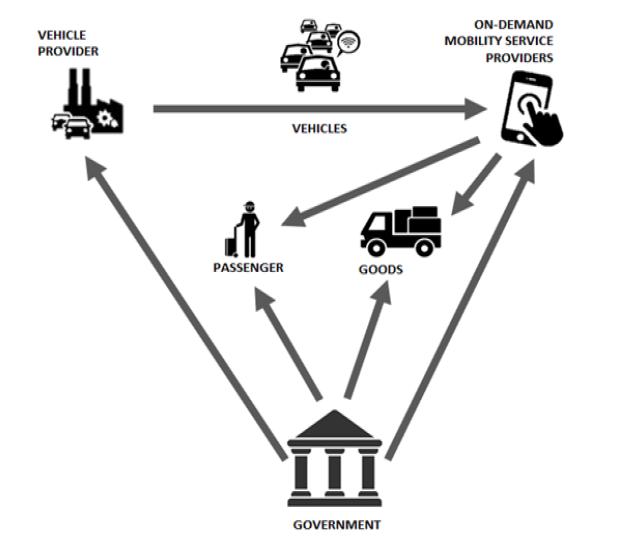
Urban mobility, a cornerstone of modern cities, is undergoing a significant transformation driven by technological advancements. The rapid proliferation of Internet of Things (IoT) devices has ushered in a new era of data-driven urban planning and management. By seamlessly integrating billions of interconnected sensors into urban infrastructure, IoT empowers cities to collect real-time data on traffic flow, public transportation usage, and parking availability [1]. However, this data's sheer volume and complexity pose significant challenges for traditional data analysis methods. Artificial Intelligence (AI), with its ability to learn from data and make intelligent decisions, offers a powerful solution to unlock the potential of IoT-driven urban mobility. By leveraging AI-driven data analytics, cities can gain insights into urban mobility patterns, enabling informed decision-making and innovative solutions [2] . Fig. 1 shows the smart mobility network chain.
This paper delves into the key applications of AI in urban mobility, including traffic management, public transportation optimization, and smart parking. We explore how AI techniques like machine learning, deep learning, and computer vision can be applied to analyze and interpret IoT data to improve efficiency, sustainability, and user experience [3]. Furthermore, we discuss the core components of IoT-based urban mobility systems, including data collection, storage, processing, and visualization.
The paper also highlights the challenges and opportunities in this field, such as data quality, privacy, and security. By addressing these challenges, cities can ensure the successful implementation of AI-driven urban mobility solutions [4]. Additionally, we explore future research directions, including integrating AI with emerging technologies like autonomous vehicles and edge computing, to revolutionize urban transportation further.
The paper also highlights the challenges and opportunities in this field, such as data quality, privacy, and security. By addressing these challenges, cities can ensure the successful implementation of AI-driven urban mobility solutions [5]. Ultimately, this paper aims to provide a comprehensive overview of AI-driven data analytics for IoT-based urban mobility solutions, highlighting the potential benefits and challenges and inspiring future research and innovation in this exciting field.
1.1 Smart City
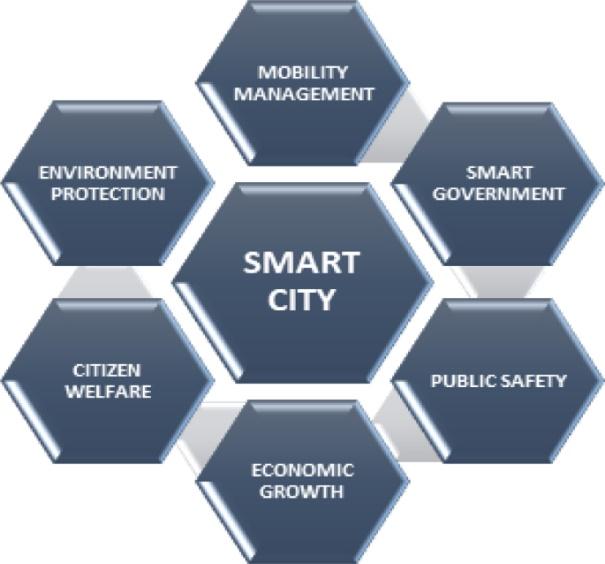
A smart city typically comprises smart homes, smart health, smart roads, smart parking, and smart people. Nowadays, technologists, engineers, and developers are exploring smart IoT-based solutions to develop the suitable structural design of a smart city [6]. Smart city implementation is based on three levels, as shown in
The deployments of IoT-based infrastructures are evolving these days due to their substantial part in the disciplines of academics and manufacturing for smart cities [7]. The metropolitan residents are expanding gradually, creating many hurdles for civic life. In 2007, 50% of the population was residing in the urban environment, which is expected to have a significant shift by 2030 based on a United Nations Population Fund forecast. IoT-based infrastructure is anticipated to play an important part in many applications for smart businesses and urban inhabitants.
1.2 General Application of Smart Cities
Part of the study discusses the general smart city applications shown in Fig. 3. This work discusses each below for detailed analysis.
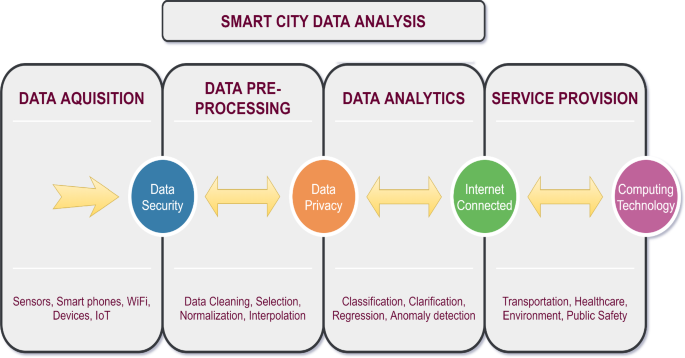
Mobility management is generally related to the efficient management of urban transport systems. It requires and uses information and communication systems to supervise transport. These technologies can use remote detection and video surveillance systems to manage traffic flows, pedestrians, and emergency handling. Smart mobility also requires various modes of public transport using environmentally friendly fuels.
Environment protection: to promote a green environment, web-based and remote monitoring are required to understand the public and green areas fully. It also requires greater environmental sustainability through better optimization and management of buildings, urban resources, and the community for energy conservation and reduction in harmful emissions.
Citizen welfare: human resources are developed to promote innovation and information technology development using a conducive learning environment. Smart learning systems enhance creativity, open-mindedness, and flexibility. Different help centers and strategies are used to explore and encourage people's participation in public matters and solve problems.
Economic growth requires implementing service and production automation schemes to accelerate the work process. Innovation and entrepreneurship create the base for new, high-end technologies that would help maintain a city's competitiveness.
Smart government: people need close contact with the government through the network and the availability of information and public services. The main objective is strengthening the government's accountability and transparency and better meeting local community needs.
Public safety: the IoT framework enhances safety and security by improving users' connectivity. It also helps manage homes and workplaces better. Ubiquitous technologies improve interaction with the surrounding environment.
2. Method and Implementation
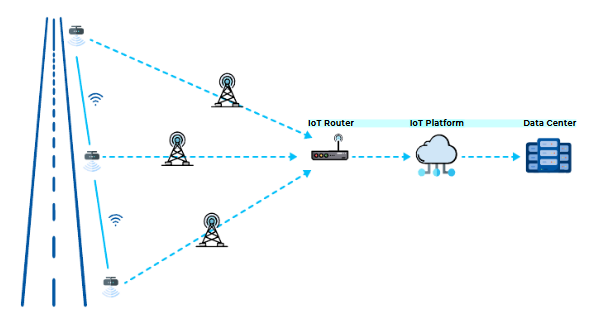
This paper's proposed architecture for collecting data from IoT devices on the road comprises three key components: the highway setup IoT router, the IoT platform, and the data center. Fig. 1 visually represents the architecture and its components for collecting data from IoT devices on the road [8]. The IoT router acts as a gateway, ensuring smooth connectivity and efficient data transmission from the IoT devices. The IoT platform plays a vital role in managing and analyzing the collected data, employing advanced data ingestion techniques and robust security measures. Finally, the data center is responsible for processing the data using AI algorithms, extracting valuable insights, and contributing to effective traffic management and optimization [9]. This architecture holds immense potential for enhancing urban mobility in smart cities by seamlessly integrating IoT road traffic data with AI.
2.1 Feature Engineering
When constructing a model, it is crucial to conduct a comprehensive data analysis to ensure the suitability of the data for model input. The date time column contains valuable information in the dataset under consideration, but its current string format is suboptimal for effective analysis. Treating time as a linear input may not adequately capture the underlying patterns, especially when considering the smooth transition between 23:00 and 00:00. Given the clear daily periodicity of time, addressing this periodic nature becomes essential. One effective approach to handle this periodicity is by utilizing sine and cosine transforms, which extract meaningful signals representing the "time of day" and "time of year". By applying these transforms, the representation of time-related patterns is enhanced, enabling the model to better capture the temporal dynamics in the data [10].
2.2 Machine Learning Methods
This study used various models to predict traffic patterns using the collected data. The models employed encompassed both traditional statistical approaches and advanced deep learning techniques.
This diverse selection of models allowed for a comprehensive exploration of different modeling paradigms and their effectiveness in capturing the complexities of traffic patterns.
2.3 Linear Regression
Linear regression is a statistical model that analyzes the linear relationship between a dependent variable and a set of independent variables. It seeks to establish a linear equation that best fits the data, enabling predictions of the dependent variable based on the independent variables. In traffic prediction, linear regression can help identify how changes in independent variables, such as time of day or weather conditions, impact traffic patterns.
2.4 K-nearest Neighbors
K-nearest neighbors are a popular machine-learning algorithm used for classification and regression tasks. It finds the k-nearest neighbors to a given data point and makes predictions based on their characteristics. In the case of traffic prediction, k-nearest neighbors can be applied to identify similar traffic patterns and make predictions based on the behavior of nearby instances.
2.5 Support Vector Regression
Support vector regression is a variant of the vector machine algorithm designed for regression tasks. Its objective is to find a function that maps input data to output values while minimizing prediction error. By constructing a hyperplane in a high-dimensional feature space defined by a subset of training samples called support vectors, support vector regression aims to capture the underlying patterns in the data and make accurate predictions.
2.6 Long Short-Term Memory
LSTM is a Recurrent Neural Network (RNN) specifically designed to address the vanishing gradient problem in traditional RNNs. The vanishing gradient problem refers to the difficulty of learning long-term dependencies when the gradients used for weight updates become very small. LSTMs overcome this challenge by introducing a memory cell and gating mechanisms, allowing better information flow and retention over time. They are widely used in various applications, including traffic prediction, due to their ability to capture and model complex temporal relationships.
3. Findings and Observations
Urban AI is part of a greater digital transformation of the intertwined physical, social, and digital realities. For effective and trustworthy AI, in addition to exemplary AI European regulation and Digital Strategy, the research recommends including urban AI in EU research programs addressing data exchange, communication networks, and policy on mobility and energy, enhancing capacity-building initiatives involving private and public (especially local) stakeholders.
On the operational side, sharing infrastructure (sensors, hardware, software) and data is key for urban AI business cases. Better inclusion of AI in research and policy frameworks about, among others, European Data Spaces and Ecosystems,(inter)sectoral interoperability and harmonization, is expected to facilitate urban AI implementation, also through the deployment of test and experimentation facilities as part of the Digital Europe program, supporting the EU in tackling the digital transformation.
AI demands regulation crossing the borders of technologies and domains. At the time of writing, not all cities are equipped with the necessary expertise to guarantee public values in digitalization, leading to either not being involved as a local party or not sufficiently being able to manage and control AI solutions implemented by commercial parties (e.g., large tech firms). The authors conclude that EU-wide support for infrastructure and governance on digitalization, e.g., urban data platforms, is essential.
Regarding new regulation, the ineliminable trade-off between efficiency and equity is key. In this respect, the researchers recommend prioritizing efficiency to accelerate the uptake of smart solutions in urban contexts. This approach is considered socially acceptable since people without direct access to AI solutions will still benefit from those thanks to positive externalities, including more efficient infrastructures for energy waste management and reduced pollution, noise, and congestion. In parallel, equity must be (partially) ensured by unbiased data collection.
Furthermore, innovative procurements should become the norm, entailing technical and ethically responsible AI requirements. This holds for local governments taking the lead in AI implementation, where procurement entails technology supply, and for cities, where enterprises are heavily involved in providing (AI-based) public services.
3.1 Mobility as a Service (MaaS)
MaaS (tailored transport services offered via a unified platform) is a good alternative to personal transport since mobility on demand is synonymous with the freedom to go anywhere, anytime. MaaS with AI-based controllers can, for instance, optimize, monitor, and coordinate autonomous car fleets while offering great options to individual users. AI-based MaaS enables ride-sharing users to share autonomous cars across an optimized route much cheaper and more safely, offering a greater social experience when riding with people of similar interests.
MaaS can significantly contribute to the sustainability and human-centricity goals. However, governance issues and difficulties for private-led MaaS platforms in devising sufficiently scalable and profitable business models hamper its diffusion. Municipalities are expected to play an increased role in framing and enabling the development of virtuous MaaS solutions.
Another relevant application is short-distance carpooling, which relies on AI to bridge the gap between car travel and public transport, allowing for precision pricing and routing. Smart parking management, thanks to AI, improves car park accessibility and fluidity. The three mentioned applications allow for reduced urban traffic and the environmental impact of urban mobility. Nevertheless, private vehicles are considered a sub-optimal sustainable solution for smart urban mobility, even if vehicles are electric since the risk of traffic increase remains.
4. Challenges of Deep Learning in Smart Cities
Technological advances in hardware, software, and integrated systems have enabled billions of intelligent devices to connect to the internet. This system is mutually stated as the IoT. The largest population is moving to cities, so the main problem is the lack of the necessary resources. If you want to support everyone, cities must manage water, energy, transportation, and other infrastructure very efficiently. But how do we do this? The data gathered varies in quality and format, which is very hard to use efficiently. The goal is to make the infrastructure smarter to use the contracted resources effectively.
They want to use modern technology to solve many pressing problems, such as waste of water, energy consumption, traffic jams, etc.. Building a more innovative city will help them solve all these problems, bringing positive economic benefits. This will create a more efficient and sustainable living environment for people. This, in turn, will attract more citizens and companies to these cities. As we see here, this cycle benefits the town's economic growth. We use the example to break down the term deep learning.
5. Future Recommendations for Smart Cities
Here are some potential recommendations for the future development and implementation of deep learning in smart cities:
Prioritize privacy and security: as smart cities become more connected, personal information can be exposed. Therefore, it is important to prioritize privacy and security when developing and implementing deep learning in smart cities. This can be achieved by using secure data encryption and ensuring that data is only accessible to authorized personnel.
Collaborate with local governments and communities: to ensure the success of deep learning in smart cities, it is important to involve local governments and communities in the development and implementation process. This helps ensure that the technology is tailored to the specific needs and concerns of the local community.
Develop user-friendly interfaces: deep learning technology can be complex and difficult to understand for non-experts. Therefore, it is important to develop user-friendly interfaces that make it easy for city officials and residents to access and understand the data generated by deep learning algorithms.
Emphasize sustainability: deep learning technology can help to optimize resource allocation and reduce waste in smart cities. However, it is important to ensure that the technology is used in a way that emphasizes sustainability and reduces environmental impact. This can be achieved by using renewable energy sources and designing smart city infrastructure with energy efficiency in mind.
Consider the ethical implications: deep learning technology can have profound social and ethical implications. Therefore, it is important to consider the ethical implications of using deep learning in smart cities and ensure that the technology is used fairly and equitably for all residents. This can be achieved by promoting transparency and inclusivity in the development and implementation.
6. Conclusion
In this article, we have presented a comprehensive review of smart cities and how the vision of IoT and machine learning has changed the conventional way of understanding things and devices. Using the large-scale data generated by deployed sensors, we use a data-centric approach to embedding intelligence in the smart city framework. Particularly, the article begins with an overview of smart city applications, then details multiple smart city components and their basic design on a hardware level.
Further, we concisely present data sets and data acquisition technology for smart cities with innovative principles in different deep learning models. Although many surveys on intelligent cities have already been published, we have presented a comprehensive review that includes IoT-based sensor deployment, communication protocols, and architectural framework that collectively transform a city into a smart city. This review paper will set a direction for investigators and experts to apply machine learning with data sciences and mobile network backgrounds, leading to a better quality of life and opening new economic opportunities for the business industry.
The future scope is encouraging and promising, as seen by the rapid growth in smart devices, sensors, AI, and machine learning. There are new opportunities for designing smart building architectures with innovative structures for corporate sectors and investors. The emerging 5G and 6G technologies will help deploy these smart buildings for residents' welfare and potentially change the way we realize smart cities today.
Author Contribution
The author conceived and designed the study, collected and analyzed the data, interpreted the results, and wrote the manuscript.
Funding
This research received no external funding.
Data Availability
The data used and analyzed during the current study are available from the corresponding author upon reasonable request.
Conflicts of Interest
The authors declare no conflicts of interest regarding the publication of this paper. These sections should be tailored to reflect specific details and contributions if necessary.
References
- [1] Lakhani, P., & Sundaram, B. (2017). Deep learning at chest radiography: automated classification of pulmonary tuberculosis by using convolutional neural networks. Radiology, 284(2), 574–582. https://doi.org/10.1148/radiol.2017162326
- [2] Raj, M. (2024). AI-powered traffic control in iot-based smart cities: revolutionizing urban mobility. Supply chain and operations decision making, 1(1), 13–19. https://scodm.reapress.com/journal/article/view/20
- [3] Mohapatra, H., & Rath, A. K. (2020). IoT-based smart water. In IoT technologies in smart-cities: from sensors to big data, security and trust (pp. 63–82). IET. https://B2n.ir/t17919
- [4] Kumar, A., Batra, N., Mudgal, A., & Yadav, A. L. (2024). Navigating urban mobility: A review of ai-driven traffic flow management in smart cities. 2024 11th international conference on reliability, infocom technologies and optimization (trends and future directions)(ICRITO) (pp. 1–5). IEEE. https://doi.org/10.1109/ICRITO61523.2024.10522206
- [5] Mohsen, B. M. (2024). Ai-driven optimization of urban logistics in smart cities: integrating autonomous vehicles and iot for efficient delivery systems. Sustainability, 16(24), https://doi.org/10.3390/su162411265
- [6] Padhiary, M., Roy, P., & Roy, D. (2025). The future of urban connectivity: AI and iot in smart cities. In Sustainable smart cities and the future of urban development (pp. 33–66). IGI global scientific publishing. https://doi.org/10.4018/979-8-3693-6740-7.ch002
- [7] Kannammal, A., & Chandia, S. (2023). Applications of AI and IoT for smart cities. In research trends in artificial intelligence: internet of things (pp. 186–202). Bentham Science Publishers. https://doi.org/10.2174/97898151364491230101
- [8] Mohapatra, H., Rath, A. K., & Panda, N. (2022). IoT infrastructure for the accident avoidance: an approach of smart transportation. International journal of information technology, 14(2), 761–768. https://doi.org/10.1007/s41870-022-00872-6
- [9] Mohapatra, H., Dehury, M. K., Guru, A., & Rath, A. K. (2023). IoT-enabled zero water wastage smart garden. In IoT enabled computer-aided systems for smart buildings (pp. 71–89). Springer. https://doi.org/10.1007/978-3-031-26685-0_4
- [10] Sreelekha, M., & Midhunchakkaravarthy. (2024). Intelligent transportation system for sustainable and efficient urban mobility: machine learning approach for traffic flow prediction. International conference on multi-strategy learning environment (pp. 399–412). Springer. https://doi.org/10.1007/978-981-97-1488-9_30