
AI-Based Network Management for IoT Devices
Abstract
The growth of the Internet of Things (IoT) has led to increased complexity in network management. Traditional methods struggle to cope with IoT devices' scalability, dynamic network conditions, and massive data volumes. Artificial Intelligence (AI) offers solutions to these challenges, providing intelligent decision-making, adaptive optimization, and predictive analytics. This paper reviews the application of AI in IoT network management, discusses existing techniques, and explores future directions for enhancing network performance, security, and efficiency through AI-driven approaches.
Keywords:AI-based network managementIoT devicesAdaptive optimizationPredictive analyticsNetwork
security, Intelligent decision-making, Scalability.
1. Introduction
The proliferation of Internet of Things (IoT) devices has transformed modern networks, enabling smart cities, healthcare monitoring, industrial automation, and more. These devices generate vast amounts of data and require efficient network management to ensure seamless communication, reliability, and security. Traditional network management approaches often fail to handle IoT environments' dynamic, heterogeneous nature. AI offers promising capabilities for intelligent network management by leveraging Machine Learning (ML), Deep Learning (DL), and other data-driven decision-making and automation techniques [1].
2. Background and Related Work
Network management for IoT encompasses tasks such as traffic routing, fault detection, security monitoring, and energy management. Conventional methods often involve rule-based systems and manual configurations, which are insufficient for large-scale, dynamic IoT networks. Recent research has explored the use of AI for automated network management. Techniques like Reinforcement Learning (RL) for resource allocation and neural networks for anomaly detection have shown significant potential. Studies highlight the limitations of traditional methods, such as lack of scalability and adaptability, and underscore the advantages of AI-driven approaches.
2.1 Challenges in IoT Network Management
Scalability: the number of connected IoT devices is expected to reach billions, posing challenges in managing the network traffic and resource allocation.
Data handling: IoT networks generate continuous data streams that require real-time processing and storage solutions.
Energy efficiency: prolonging battery life in IoT devices while maintaining network performance is critical. Security and privacy: IoT networks are vulnerable to cyber-attacks, making it necessary to implement robust security measures.
Dynamic network conditions: frequent changes in topology and variable network loads complicate management tasks [2].
2.2 AI Techniques for IoT Network Management
Machine learning: ML techniques, such as supervised and RL, can predict network traffic patterns, optimize routing, and allocate resources dynamically [3].
Deep learning: DL models, including Convolutional Neural Networks (CNNs) and Recurrent Neural Networks (RNNs), can detect anomalies, predict failures, and perform real-time network monitoring. Fuzzy logic: fuzzy Logic is useful for handling uncertainty in decision-making processes, so fuzzy logic systems can adapt to variable network conditions.
Genetic algorithms: these algorithms optimize complex problems in routing, resource allocation, and load balancing by evolving solutions over successive iterations.
2.3 AI-Driven Network Management Architectures
Centralized vs decentralized management: centralized management relies on a central AI controller, whereas decentralized management distributes decision-making across edge devices.
Edge computing and AI: integrating AI at the network edge reduces latency by processing data closer to the source, enabling real-time decision-making [4].
Cloud-based Solutions: cloud computing supports large-scale data processing and AI model training, offering a centralized approach to managing multiple IoT networks [3].
Hybrid approaches: combining edge and cloud-based AI provides a balance between latency, computational power, and resource utilization [5].
2.4 Challenges and Limitations of AI in IoT Network Management
Data quality and availability: AI models rely on high-quality datasets, which can be challenging to obtain due to incomplete or noisy data.
Computational resource requirements: many IoT devices have limited computational resources, restricting deploying complex AI models.
Ethical and privacy concerns: ensuring data privacy and addressing the ethical implications of AI decision-making are essential for widespread adoption.
Scalability of AI solutions: deploying AI across heterogeneous IoT networks with different protocols and standards presents integration challenges.
3. Future Directions
Explainable AI: developing AI systems that provide transparent and understandable decisions for network administrators.
Federated learning: using federated learning enables model training directly on IoT devices, preserving data privacy.
Integration with 5G and beyond: leveraging new network technologies like 5G to enhance AI capabilities in latency and bandwidth.
Adaptive AI systems: creating AI models that adapt to changing network conditions through continuous learning.
4. AI-Based Algorithms for Network Management in IoT
4.1 Reinforcement Learning for Dynamic Resource Allocation
RL is suitable for managing dynamic resources in IoT networks by learning from environmental feedback. It helps optimize network configurations such as bandwidth allocation, device scheduling, and load balancing [6], [7].
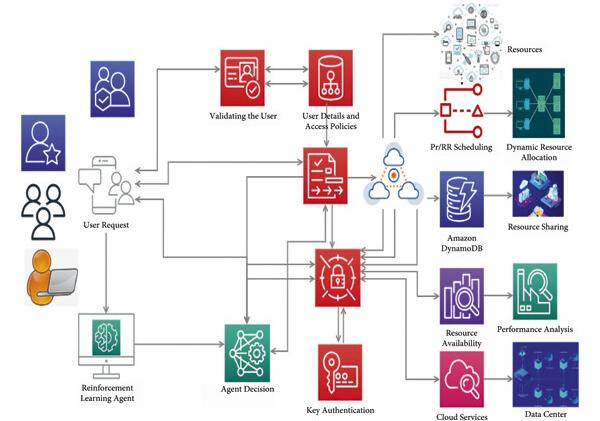
Algorithm 1. Q-learning for resource allocation.
I. Initialize:
− Set Q-values Q(s, a) for all state-action pairs to zero.
− Define the learning rate α, discount factor γ, and exploration rate ε.
II. Repeat for each episode:
− Observe the current states of the network, including metrics like bandwidth usage, device activity, and latency. − Choose an action (e.g., reallocate bandwidth, reroute traffic) based on the epsilon-greedy strategy:
− With probability ε, choose a random action.
− Otherwise, choose the action that maximizes Q(s, a).
− Execute the action, observe the reward r, and transition to the new state s'.
− Update Q-value:
Q(s, a) = Q(s, a) + α [r + γ max_{a′} Q(s′, a′) − Q(s, a)] − Set s = s′.
III. End the episode when a stopping condition is met (e.g., a stable network state).
IV. Convergence check: periodically evaluate the Q-values to check if they have converged.
4.2 Convolutional Neural Networks for Anomaly Detection
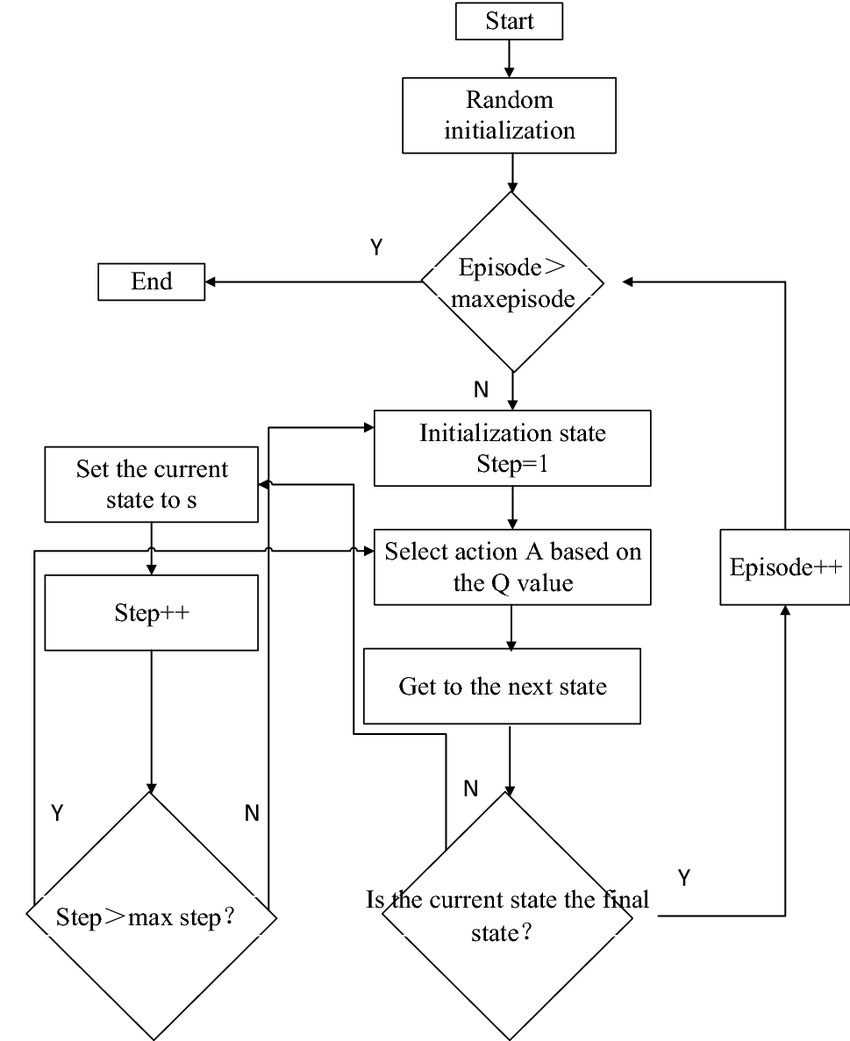
CNNs can detect anomalies in network traffic and sensor data by learning spatial patterns within time-series data from IoT devices [8].
Algorithm 2. CNN-Based anomaly detection [9].
I. Data collection:
− Collect time-series data from IoT devices, including metrics such as CPU usage, memory consumption, and network traffic.
II. Pre-processing:
− Normalize the data to fit within a specific range.
− Segment the data into fixed-length sequences for input to the CNN model.
III. Model architecture:
− Define a CNN architecture with layers such as convolutional layers (for feature extraction), pooling layers (for dimensionality reduction), and fully connected layers (for classification).
IV. Training:
− Train the CNN using a labeled dataset containing normal and anomalous examples.
− Use loss functions such as binary cross-entropy if it’s a binary classification problem.
V. Anomaly detection:
− Predict the class of incoming data sequences using the trained model.
− Flag sequences with a high probability of being anomalous for further investigation.
VI. Evaluation:
− Use precision, recall, and F1-score metrics to evaluate the model's performance.
a. b.

4.3 Genetic Algorithms for Network Optimization
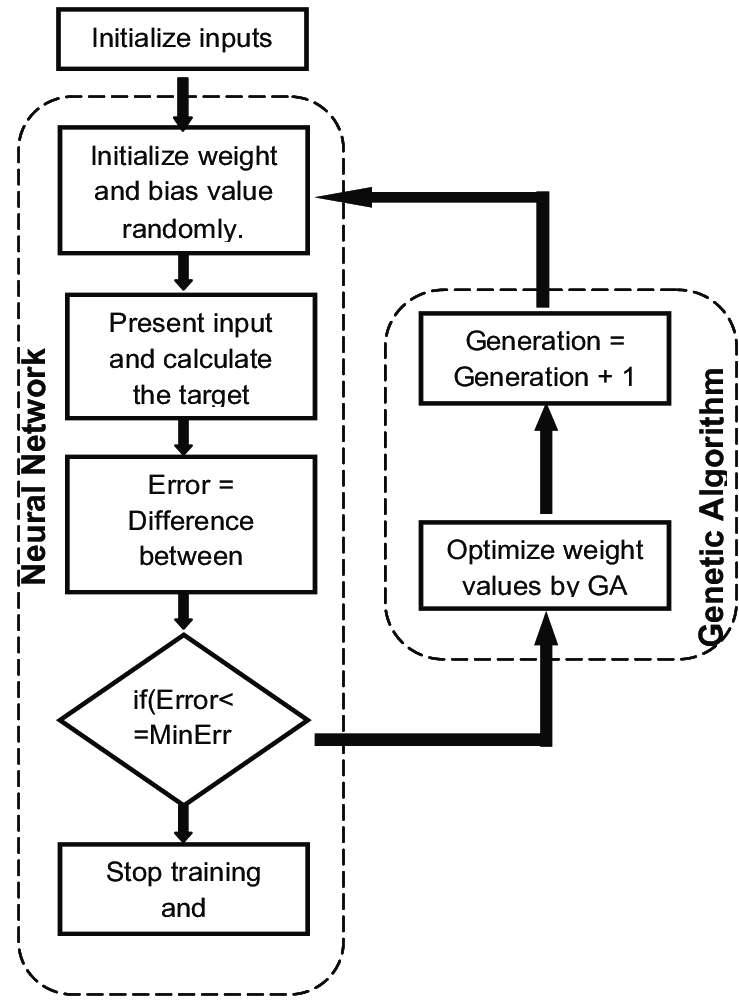
Genetic Algorithms (GAs) can solve optimization problems in IoT networks, such as routing and resource allocation, by mimicking natural selection [10].
Algorithm 3. GA for Optimizing Routing.
I. Initialization:
− Generate an initial population of routing paths, each represented as a chromosome.
II. Fitness Evaluation:
− Evaluate each chromosome based on a fitness function that measures path latency, bandwidth usage, and energy consumption.
III. Selection:
− Select pairs of chromosomes for crossover based on their fitness, with fitter chromosomes having a higher chance of selection.
IV. Crossover:
− Perform crossover to create new offspring by combining parts of selected chromosomes.
V. Mutation:
− Introduce mutations by randomly altering genes in some offspring to maintain genetic diversity.
VI. Replacement:
− Replace the least fit individuals in the population with new offspring.
VII. Termination:
− Repeat the process for several generations or until a convergence criterion is met (e.g., fitness values stabilize).
5. Real-world Applications of AI in IoT Network Management
5.1 Smart Cities
AI-based IoT network management is crucial in smart cities, where diverse applications such as traffic control, environmental monitoring, and public safety require efficient coordination.
Traffic management: AI algorithms use data from connected vehicles to predict traffic congestion and adjust traffic light timings in real time to improve flow.
Environmental monitoring: AI analyzes data from air quality sensors and triggers alerts if pollution levels exceed safe limits, helping authorities respond promptly.
Public safety: AI-driven video analytics detect unusual activity from surveillance cameras, alerting law enforcement to potential incidents.
5.2 Industrial IoT
Industrial settings leverage AI-based network management to optimize machine communication, prevent failures, and streamline production processes.
Predictive maintenance: AI models predict equipment failures based on sensor data, allowing maintenance teams to perform repairs before a breakdown occurs, thus reducing downtime.
Quality control: AI detects anomalies in manufacturing processes, such as variations in product dimensions or material defects, ensuring consistent quality.
Energy optimization: AI optimizes energy consumption by adjusting machine activity schedules and regulating HVAC systems in response to real-time conditions.
5.3 Healthcare Monitoring
AI-based IoT network management in healthcare enables remote patient monitoring, emergency response, and hospital automation.
Remote patient monitoring: AI analyzes vital signs data from wearable devices, detecting health anomalies and sending alerts to healthcare providers.
Emergency response: in a detected health emergency, AI can prioritize network traffic for emergency services to ensure prompt response.
Hospital automation: AI manages IoT devices within hospitals, such as connected medical equipment and environmental controls, to optimize resource use and enhance patient care.
5.4 Agriculture
AI-based network management supports smart farming, where IoT devices monitor soil, weather, and crop conditions.
Precision farming: AI algorithms analyze data from soil moisture sensors, weather stations, and drones to optimize irrigation and fertilization schedules.
Livestock monitoring: AI processes data from wearable sensors on livestock to monitor health, activity, and feeding patterns, helping farmers manage herds efficiently.
Supply chain management: AI tracks produce from farm to market, optimizing transportation routes to reduce spoilage and ensure timely delivery.
6. Conclusion
AI-based network management for IoT devices represents a significant advancement in addressing the limitations of traditional approaches. By incorporating intelligent algorithms, networks can dynamically adapt to changing conditions, optimize resource utilization, and enhance security. Although challenges remain, the potential benefits of integrating AI with IoT networks make it a crucial area for future research and development. AI can transform IoT network management with continued innovation, enabling resilient, scalable, and efficient systems.
Acknowledgments
The author wishes to convey heartfelt appreciation to the Department of Computer Science at Kalinga Institute of Industrial Technology for the essential academic support and infrastructure that facilitated the successful completion of this research. Additional thanks are directed to colleagues and faculty members whose valuable feedback and encouragement enhanced this work.
Funding
This research did not receive any specific funding from public, commercial, or non-profit organizations. It was conducted using the author's personal resources.
Data Accessibility
The data that underpin the results of this research can be obtained from the corresponding author upon a reasonable request. All data utilized were generated or assessed during the present study and are not publicly accessible due to privacy or institutional limitations.
Competing Interests
The author states that there are no competing interests associated with the publication of this paper. The research was carried out objectively, and no financial or non-financial relationships affected the results.
References
- [1] Haras, M., & Skotnicki, T. (2018). Thermoelectricity for IoT–A review. Nano energy, 54, 461–476. https://doi.org/10.1016/j.nanoen.2018.10.013
- [2] Alhaidari, F., & Balharith, T. Z. (2021). Enhanced round-robin algorithm in the cloud computing environment for optimal task scheduling. Computers, 10(5). https://doi.org/10.3390/computers10050063
- [3] Siddharth Singh, Singh, A., Sahu, A. K., & Siddiqui, N. A. (2024). Optimizing cloud performance: A comprehensive study of load balancing strategies and algorithms. Smart internet of things, 1(1 SE-Articles), 1–16. https://doi.org/10.22105/siot.v1i1.34
- [4] Shah, N., & Farik, M. (2015). Static load balancing algorithms in cloud computing: challenges & solutions. International journal of scientific & technology research, 4(10), 365–367. https://b2n.ir/d46065
- [5] Pradhan, P., Behera, P. K., & Ray, B. N. B. (2016). Modified round robin algorithm for resource allocation in cloud computing. Procedia computer science, 85, 878–890. https://doi.org/10.1016/j.procs.2016.05.278
- [6] Yang, M., Wang, H., & Zhao, J. (2015). Research on load balancing algorithm based on the unused rate of the cpu and memory. 2015 fifth international conference on instrumentation and measurement, computer, communication and control (IMCCC) (pp. 542–545). IMCCC. https://doi.org/10.1109/IMCCC.2015.120
- [7] Ma, C., & Chi, Y. (2022). Evaluation test and improvement of load balancing algorithms of nginx. IEEE access, 10, 14311–14324. https://doi.org/10.1109/ACCESS.2022.3146422
- [8] Mohapatra, H., & Rath, A. K. (2020). Fault-tolerant mechanism for wireless sensor network. IET wireless sensor systems, 10(1), 23–30. https://doi.org/10.1049/iet-wss.2019.0106
- [9] Lenka, R. K., Kolhar, M., Mohapatra, H., Al-Turjman, F., & Altrjman, C. (2022). Cluster-based routing protocol with static hub (CRPSH) for WSN-Assisted IoT networks. Sustainability, 14(12). https://doi.org/10.3390/su14127304
- [10] Mohapatra, H., & Rath, A. K. (2021). An IoT based efficient multi-objective real-time smart parking system. International journal of sensor networks, 37(4), 219–232. https://doi.org/10.1504/IJSNET.2021.119483